

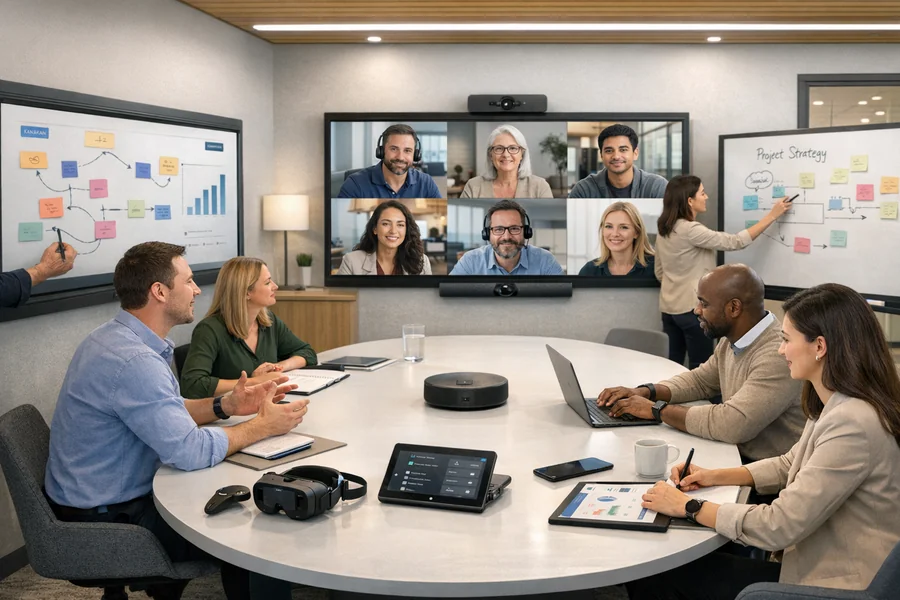
Modern workplaces in England are rapidly evolving to support hybrid work models, where seamless communication between in-person and remote teams is essential. Smart meeting room solutions play a pivotal role in enhancing collaboration by integrating automation, artificial intelligence (AI), and high-quality audiovisual (AV) systems. These advanced setups enable organisations to overcome common hybrid work challenges, ensuring meetings are efficient, inclusive, and productive. By automating controls such as lighting, temperature, and equipment, smart meeting rooms significantly reduce setup time and technical disruptions, allowing teams to focus on meaningful interactions.
Key technologies driving smart meeting room solutions
At the heart of these smart meeting room solutions are cutting-edge technologies designed to optimise communication and collaboration. AI-driven features such as voice control, smart scheduling, and auto-transcription ensure that all participants—whether remote or onsite—are heard and seen clearly. Interactive displays and digital whiteboards, including platforms like Miro and Yealink MeetingBoard, facilitate real-time annotations and brainstorming sessions, integrating smoothly with project management tools such as Asana and Trello. Unified communication platforms like Microsoft Teams, Zoom, and Google Meet bring video calls, chat, and document collaboration into a single ecosystem, simplifying workflows and enhancing user experience.
- AI-driven features: Voice commands, smart scheduling, AI cameras and microphones, auto-transcription
- Interactive displays: Real-time annotations, digital whiteboards, project tool integration
- Unified platforms: Seamless video conferencing, chat, document co-editing, task management
- Emerging technologies: VR/AR environments offering immersive collaboration and one-touch controls
Benefits of smart meeting room solutions for modern businesses
Implementing smart meeting room solutions delivers multiple advantages for organisations across sectors such as corporate offices, education, and hospitality. These technologies enhance meeting efficiency by minimising technical glitches and streamlining room setup. Advanced analytics improve space utilisation by optimising booking and room design, while integrated workflows reduce the need to switch between applications, boosting overall productivity. Importantly, smart meeting rooms promote hybrid equity by ensuring remote participants are fully engaged, fostering inclusivity and collaboration. IT teams benefit from centralised remote management capabilities, reducing downtime and support costs.
- Improved meeting efficiency with faster setup and fewer disruptions
- Optimised space utilisation through data-driven room booking and planning
- Greater productivity with integrated communication and project management tools
- Enhanced inclusivity for remote and hybrid participants
- Reduced IT support demands via centralised system control and monitoring
Integrating smart meeting room solutions for future-ready workplaces
Businesses in England looking to future-proof their workplace collaboration should consider adopting smart meeting room solutions that combine hardware, software, and AI innovations. Leading providers like Biamp Europe offer comprehensive AV ecosystems that include audio processors, conferencing equipment, and control systems tailored for seamless hybrid communication. Real-world implementations, such as automated meeting spaces in museums and corporate offices, demonstrate how these solutions revitalise environments and improve user experiences. As hybrid and asynchronous work become standard, smart meeting rooms will continue to evolve, supporting flexible workstyles and enhancing team connectivity across time zones.
